Fasting Pogača — Egg-Free Round Bread
Traditional Serbian pogača without eggs or milk — soft, golden yeast bread for fasting Slava celebrations and holiday tables.
Prep
20 min
Cook
35 min
Total
90 min
Servings
8
Preparation
1. Activating the Yeast
In a small bowl, combine 100 ml of warm water (from the total 300 ml), the sugar and the dried yeast. Stir gently and leave for 8–10 minutes. Foam or bubbles should appear — a sign of active yeast. Temperature is key: below 30°C the yeast works slowly; above 43°C it dies. If unsure, test the water on the inner side of your wrist — it should feel comfortable, not hot.
2. Kneading the Dough
In a large bowl, sift the flour and add the salt. Mix together. Make a well in the centre and pour in the activated yeast, the oil and the remaining warm water. Begin mixing with a fork from the centre outwards, then switch to kneading by hand. Knead vigorously for 10 minutes — the dough should become smooth, elastic and pull away from your hands. If it sticks, add flour half a teaspoon at a time. Well-kneaded dough is as soft as an earlobe.
3. First Rise
Shape the dough into a smooth ball. Lightly oil the bowl, place the dough inside and cover with a clean kitchen cloth or cling wrap. Leave in a warm, draught-free place for 40–50 minutes until doubled in size. Good spots: a corner of the kitchen away from windows, near a radiator, or an oven that has been switched off with just the light on. Never place dough near an open window or in a draught.
4. Shaping the Pogača
Turn the risen dough onto a lightly floured surface. Press down with your fists to release the air — this is called “punching down” and gives a more even texture. Shape into a smooth ball: gather the edges of the dough towards the bottom, pressing and rotating the ball until the surface is taut and smooth.
Grease a round tin (28–30 cm diameter) or a regular square baking sheet with oil, or line with baking parchment. Place the ball of dough in the centre and press with your palms to form an even disc about 2–3 cm thick. Make sure the thickness is even — thinner edges will bake faster.
5. Decorating and Second Rise
Brush the surface of the pogača with water (using a pastry brush or a wet hand) — this gives a shiny look and helps the seeds stick. Scatter generously with sesame seeds (or poppy seeds, flaxseeds or a mixture). Use a fork or wooden skewer to mark deep lines in a grid or cross pattern as a cutting guide.
Cover with a cloth and leave to rise for another 20–25 minutes in a warm spot. Meanwhile preheat the oven.
6. Baking
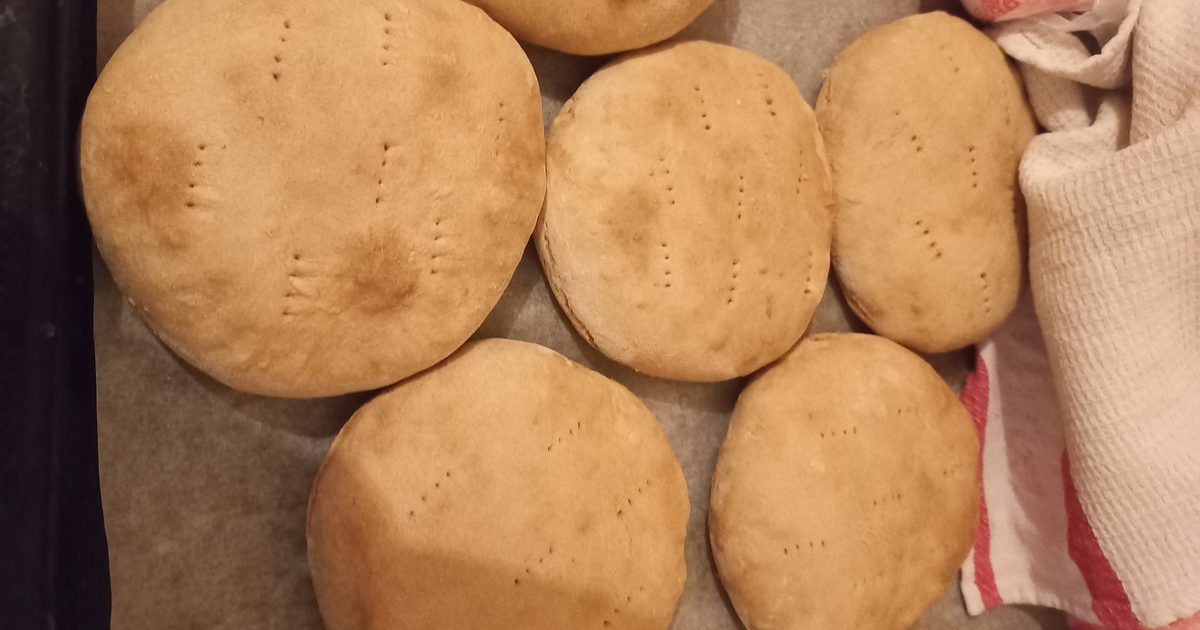
Preheat the oven to 200°C (top and bottom heat) or 185°C with convection. Place the pogača on the middle rack. Bake for 30–35 minutes until the crust is a deep golden-brown and the sesame seeds are toasted. The pogača is ready when it sounds hollow when tapped on the bottom.
For a shinier crust: brush with water or plant-based milk 5 minutes before the end and return to the oven.
7. Cooling and Serving
Remove the finished pogača and leave to cool on a wire rack for 20–30 minutes before tearing or cutting. Traditionally it is broken by hand, not cut with a knife — especially at the Slava, where the breaking of the bread symbolises togetherness.
Tips
Slava symbolism: pogača is the centrepiece of the Serbian table, especially for St Nicholas (19 December) and St Sava (27 January), both celebrated during fasting periods. Without eggs or milk, it is completely fasting-compliant and suitable for these holidays even on the strictest fasting days.
Thicker, softer pogača: for a taller pogača use a smaller tin (24 cm diameter) and let the dough rise more freely. You get a tall, soft loaf with a thin crust — ideal for fasting family meals.
Storage: pogača is best eaten fresh. Keep wrapped in a clean cloth (not plastic) at room temperature for up to 2 days. Slices can be frozen and thawed at room temperature or lightly warmed in the oven at 160°C for 5 minutes.
Flavour variations: for a more aromatic pogača, add a teaspoon of dried rosemary or thyme to the dough. For a lightly sweet pogača, increase sugar to 2 teaspoons and add grated lemon zest — this variation goes beautifully with fasting ajvar or tea.