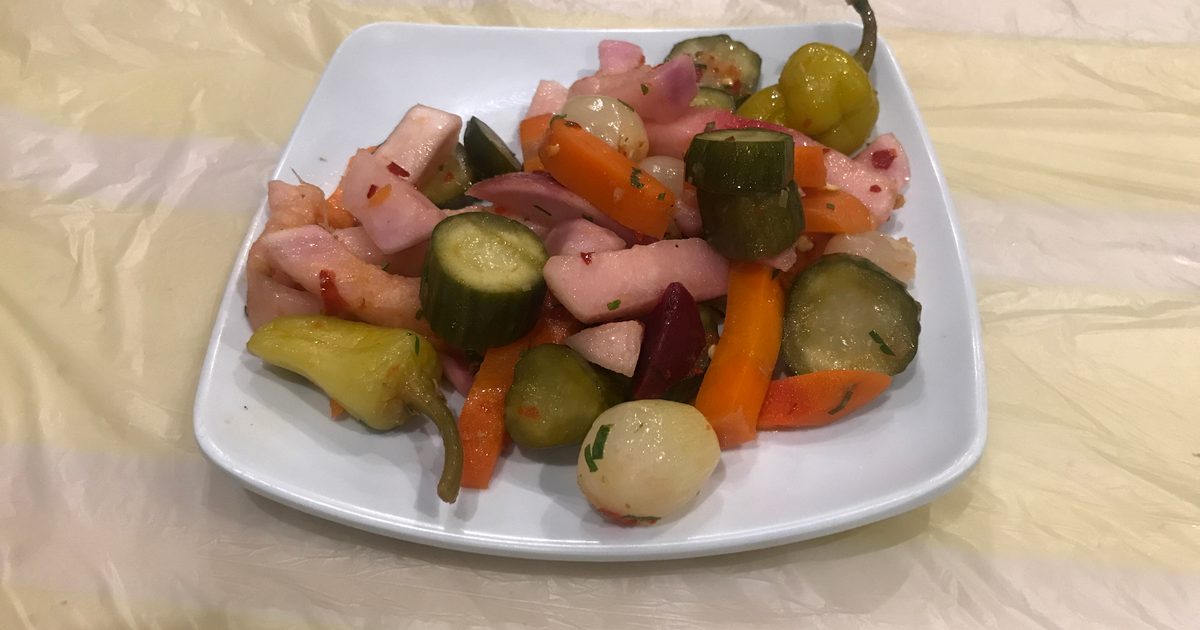
Mixed Winter Pickles (Tursija)
Serbian mixed tursija of green tomatoes, pepper, carrot and cabbage — tangy, crunchy and refreshing, a fasting winter preserve that keeps for months.
Prep
60 min
Cook
0 min
Total
1440 min
Servings
12
Preparation
1. Preparing the Vegetables
Wash the green tomatoes thoroughly. Leave small tomatoes whole; halve or quarter larger ones. Make several punctures with a fork or toothpick on each tomato — this speeds up fermentation and allows the brine to penetrate inside.
Remove the stems and seeds from the peppers and cut into large pieces or semicircular strips. Peel the carrots and cut into thick rounds or diagonal sticks. Cut the celery stalks into 5 cm lengths. Leave the small chillies whole.
2. Making the Brine
For every litre of water, dissolve 60 g of salt (roughly 3 level tablespoons). Use cold, clean water. Bring the brine to the boil, then cool to room temperature and use cold — never hot, as hot water destroys the beneficial bacteria responsible for fermentation.
Check the brine strength using the old household trick: place a raw egg in the brine — if it floats with a surface area the size of a coin exposed, the salt is correctly measured.
3. Filling the Jars or Crock
Place a dill umbel, a bay leaf, a few peppercorns and cherry or oak leaves (if using) on the bottom of each jar or crock. Then layer the vegetables alternately — tomatoes, peppers, carrot, celery — distributing the chillies evenly throughout.
Pack the vegetables firmly but without crushing — they need to be snug enough to stay submerged under the brine, but not so compressed that they are damaged. The vegetables must be completely covered by the brine.
4. Sealing and Fermentation
Pour cold brine over the vegetables right to the top. If using a large crock, place a plate or wooden lid on top and weigh it down with something heavy (a stone, a jar filled with water) to keep the vegetables submerged. If using jars, seal loosely for the first few days.
Leave at room temperature for 2–5 days to start the fermentation — the appearance of bubbles during this period is normal and desirable. Then move to a cold place — a cellar, larder or balcony (8–15°C is ideal). In the cold, fermentation slows and the tursija matures gradually.
5. Maturing
The tursija is ready to eat after at least 2–3 weeks, but develops its full flavour after a month. Check every few days: a foam on the surface is normal (skim it off with a spoon), but if you notice a mouldy surface, remove it immediately and check that the brine is sufficient.
Tursija made in October ideally keeps until March–April of the following year — perfect for Great Lent!
Tips
When to make tursija: the ideal time is October — the vegetables are still firm and fresh, and temperatures are beginning to drop, which slows fermentation and gives the tursija a better flavour. Tursija made in a cooler period is always crunchier and longer-lasting than one made earlier in the season.
Crunchiness: the secret to crunchy tursija is tannin — a compound found in sour cherry, oak, blackcurrant or vine leaves. Drop 2–3 cherry leaves on the bottom of the crock and the tursija will be considerably crunchier. The leaves are not eaten — they are purely a preservative and texture aid.
White foam is not dangerous: in the first days of fermentation a white foam appears on the surface — these are beneficial lactic acid bacteria at work and it is a sign of healthy fermentation. Skim it off with a clean spoon and continue normally. The only thing to watch for is green or black mould — this indicates a problem and must be dealt with immediately.
Fasting table: tursija contains no oil, making it suitable for strict fasting days — including Clean Monday, Holy Saturday and all days when fasting rules prohibit oil. With fasting bread and a plain soup, tursija provides one of the most complete fasting meals.
Tradition: in Serbian villages, making tursija was a collective duty — neighbours would gather, help one another and the crocks would be filled together. This tradition of community around winter preserves still lives on in parts of Serbia.