Slavski Kolač (Slava Bread)
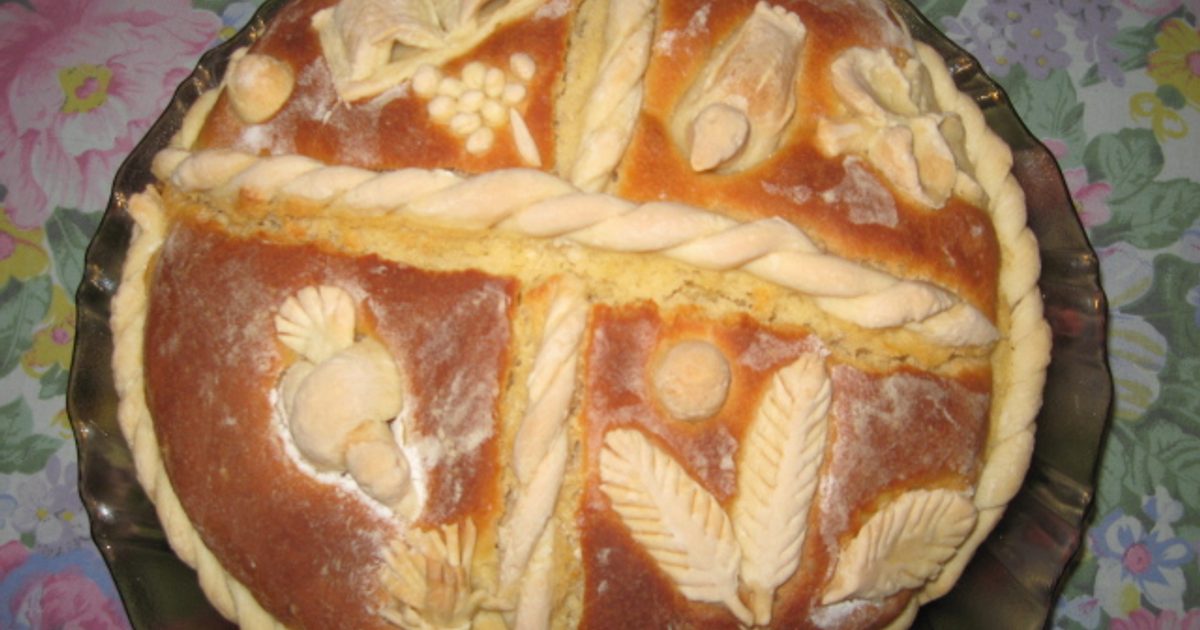
Traditional round enriched bread with a cross and the monogram IS HS NI KA — the centrepiece of every Slava, blessed in church before the rite of breaking.
Prep
90 min
Cook
50 min
Total
140 min
Servings
12
Preparation
1. Activating the Yeast
In a small bowl, combine the lukewarm milk (about 100 ml of the total quantity) with a tablespoon of sugar and the crumbled fresh yeast (or dried). Leave in a warm place for 10–15 minutes until a foamy cap forms on the surface — a sign that the yeast is alive and active. If nothing happens after 10 minutes, the yeast is old and the bread will not rise.
2. Kneading the Dough
Sift the flour into a large bowl and make a well in the centre. Pour in the activated yeast, the remaining lukewarm milk, sugar, eggs, melted cooled butter and salt. Knead by hand or with a stand mixer using the dough hook for 10–15 minutes until the dough is smooth, elastic and begins to pull away from the sides of the bowl. The dough should be soft but not sticky — if too sticky, add a little flour gradually.
3. First Rise
Shape the dough into a ball and place in an oiled bowl, covered with a clean kitchen towel. Leave in a warm, draught-free place for 1 to 1½ hours until doubled in size. The ideal temperature is 25–28°C — you can use an oven with just the light on, or place it near a warm radiator.
4. Shaping the Round, Cross and Seal
Turn the risen dough onto a lightly floured surface and gently knock back the air. Set aside about a quarter of the dough for the decorations. Shape the rest into a ball and carefully stretch it into a round loaf about 4–5 cm deep — place in a greased round tin or on a baking tray lined with parchment.
Use the reserved dough to make the decorations. The cross is made from two long twisted ropes of dough placed over the centre at right angles. The seal bearing Christ’s monogram IS HS NI KA (“Jesus Christ Conquers”) is traditionally stamped with a carved wooden seal (prosphora stamp) or hand-formed letters of dough placed in the four sections of the cross:
- top left: IS (Iesus)
- top right: HS (Christos)
- bottom left: NI (Nika)
- bottom right: KA (Conquers)
Decorate the edges with small sprigs, leaves or ears of wheat made from dough — symbols of fertility and blessing.
5. Second Rise
Cover the shaped kolač with a cloth and leave for another 30–40 minutes to rise. Brush with the beaten egg to give it a shiny golden colour when baked.
6. Baking
Preheat the oven to 180°C. Bake for 45–50 minutes until a beautiful golden-brown colour is achieved and a skewer inserted into the centre comes out clean. If the surface is browning too quickly, cover with aluminium foil for the last 15 minutes. Remove the baked kolač and leave to cool completely on a wire rack — never slice while still warm.
7. Blessing at the Slava
The slavski kolač is taken to church on the eve of the Slava (or on the morning of the Slava itself), together with the žito (kolivo/wheat pudding) and red wine. The priest performs the rite of breaking the bread — he turns it in a cross motion with the head of the household, pours a little red wine over the cross and says a prayer. The kolač is then broken (not sliced) and shared among family members and guests as a blessing.
Tips
Golden colour: for a richly gleaming finish, brush the kolač twice — once before baking and again 15 minutes before the end. You can add a teaspoon of milk to the glaze for a softer sheen.
Symbolism of the cross and seal: the cross in the centre represents Christ’s crucifixion and salvation, while the seal IS HS NI KA symbolises Christ’s victory over death. Traditional carved wooden stamps (prosphora seals) have been made in monasteries for centuries, passed down through generations — if a family possesses one, it is kept as a sacred object.
When to take it to church: the kolač is usually taken to the Vespers service on the eve of the Slava (Saturday evening if the Slava falls on Sunday) or to the morning liturgy on the day of the Slava itself. The head of household holds it during the breaking rite, together with the priest.
Storage: the true slavski kolač is best made the day before the Slava to rest overnight — it holds its shape better when broken and sliced. Do not place in a plastic bag until completely cool.
Dough tip: for an even softer and fluffier kolač, replace 100 ml of the milk with buttermilk or sour cream — the dough will be more moist and the kolač will stay fresher longer.