Žito (Kolivo) for Slava — Wheat Berry Pudding
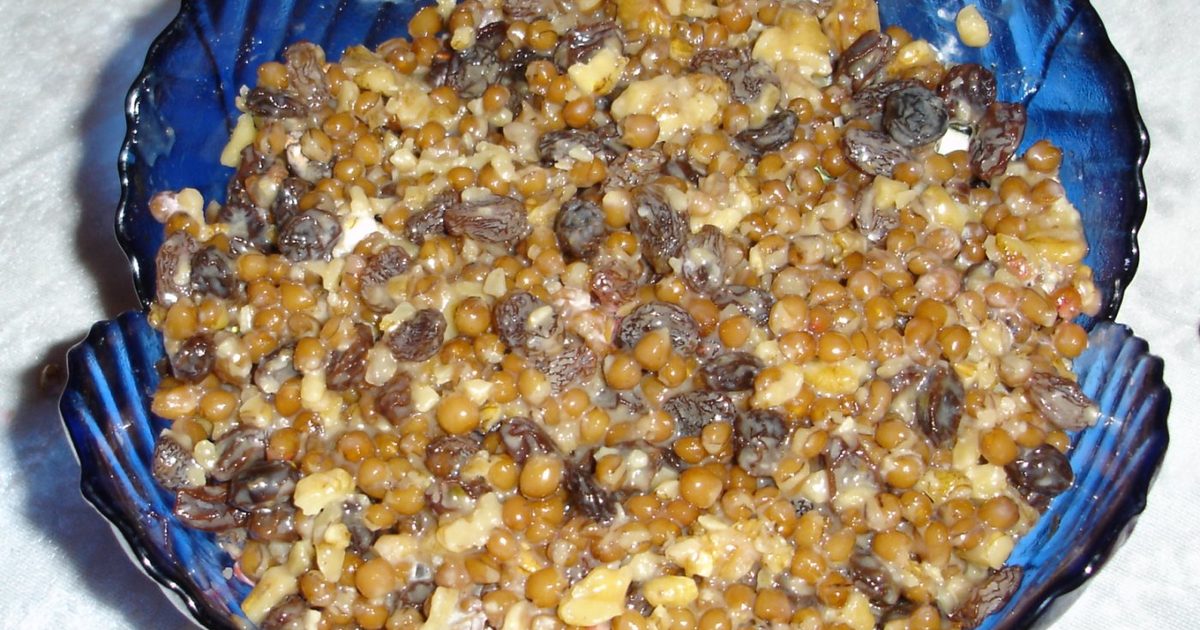
Slava kolivo of cooked wheat berries with walnuts, sugar and spices — a symbol of resurrection and the bread of life, blessed alongside the slavski kolač.
Prep
20 min
Cook
180 min
Total
200 min
Servings
12
Preparation
1. Washing the Wheat
Pick over the wheat carefully and remove any small stones, pieces of straw or damaged grains. Wash in several changes of water, stirring with your hand, until the water runs completely clear — wheat often carries a lot of dust and debris. This is an important step, as the cleanliness of the washing determines the purity of the final flavour.
2. Soaking Overnight
Cover the washed wheat with plenty of cold water (about 3 times the volume of water to wheat) and leave to soak for at least 8–12 hours, ideally overnight. Soaking reduces the cooking time and makes the grains softer. The water needs to cover the wheat by 5–6 cm as the wheat swells significantly.
3. Cooking
The next day, drain the soaked wheat, transfer to a large pot and cover with fresh cold water (about 2 litres). Bring to the boil, then reduce the heat and cook over a low heat for 2 to 3 hours, stirring occasionally and topping up with water as needed. The wheat is done when each grain is completely soft and begins to split under the pressure of a spoon. Towards the end of cooking, leave on a very low heat to absorb all the remaining liquid (but without burning).
Drain through a colander and leave to cool and dry completely — at least 2 hours. The wheat must not be damp, otherwise the žito will be soggy.
4. Passing Through the Mincer
The traditional method — pass the cooked, completely cooled wheat through a meat mincer with a medium or coarse plate. This is the decisive step that gives žito its characteristic texture — not as fine as a paste, but not as coarse as whole grains. If you do not have a meat mincer, you can use a food processor in short pulses, but take care not to reduce the wheat to a mush.
5. Mixing with Walnuts and Spices
Place the minced wheat in a large bowl and add the ground walnuts, icing sugar, vanilla sugar, ground cinnamon and grated orange zest. If you want a firmer mixture, add the crushed biscuits — they absorb excess moisture and make the žito more stable. Mix by hand (clean) or with a large spoon until everything comes together into a uniform mass. Taste and adjust the sweetness — some prefer it sweeter, others milder.
6. Shaping
Transfer the žito to a deep bowl — ideally round glass or ceramic — and press down with a spoon to create a level, compact surface. You can shape it into a slightly domed mound or a flat surface, depending on the dish.
7. Decorating
Dust the top of the žito evenly with icing sugar passed through a sieve — the layer should be white and opaque. Traditionally, a cross is then imprinted into the sugar with the back of a teaspoon or a small mould, and the letters IS HS NI KA can be imprinted in the four sections of the cross, just as on the slavski kolač. Some families decorate the žito with walnut halves arranged in the form of a cross, or scatter a layer of grated chocolate over the sugar. All depends on family tradition.
Tips
Symbolism: žito (kolivo) is in Orthodox tradition a symbol of resurrection. Christ himself said: “Truly, truly I say to you: unless a grain of wheat falls into the earth and dies, it remains alone; but if it dies, it bears much fruit” (John 12:24). The wheat grain that dies in the ground to bring forth new life is a foretaste of Christ’s death and resurrection, and of our own future resurrection.
Žito for a parastos (memorial service): for commemorating the departed, žito is prepared without the icing sugar on top or with only a discreet decoration — without the cross and the letters IS HS NI KA, which are reserved for joyful Slava occasions. Žito for a parastos often contains slightly less sugar, and pomegranate juice (a symbol of blood and life) is sometimes used instead of orange zest. It is dusted with ground walnuts and sometimes grated chocolate. It is brought to the graveside or to church for the memorial liturgy.
Strict fast: žito is ideal for all fasting periods because it contains neither oil nor dairy products — it belongs to the category of dry fasting (suhojedenije). It is therefore a universal Slava dish that can be prepared even when the Slava falls during Great Lent (e.g. St Alexios, St Mary of Egypt, the Forty Martyrs).
Storage: žito can be prepared one or two days before the Slava and kept in the refrigerator covered with cling wrap. Dust with icing sugar only just before serving, as it dissolves and absorbs moisture if applied too early.
Serving: traditionally served in a small teaspoon to guests after the blessing. It is considered sinful to waste žito — any remainder can be eaten over the following days or given to the birds.